Menu
Industrial coil repair & refurbishment
Failed doesn't always
mean finished.
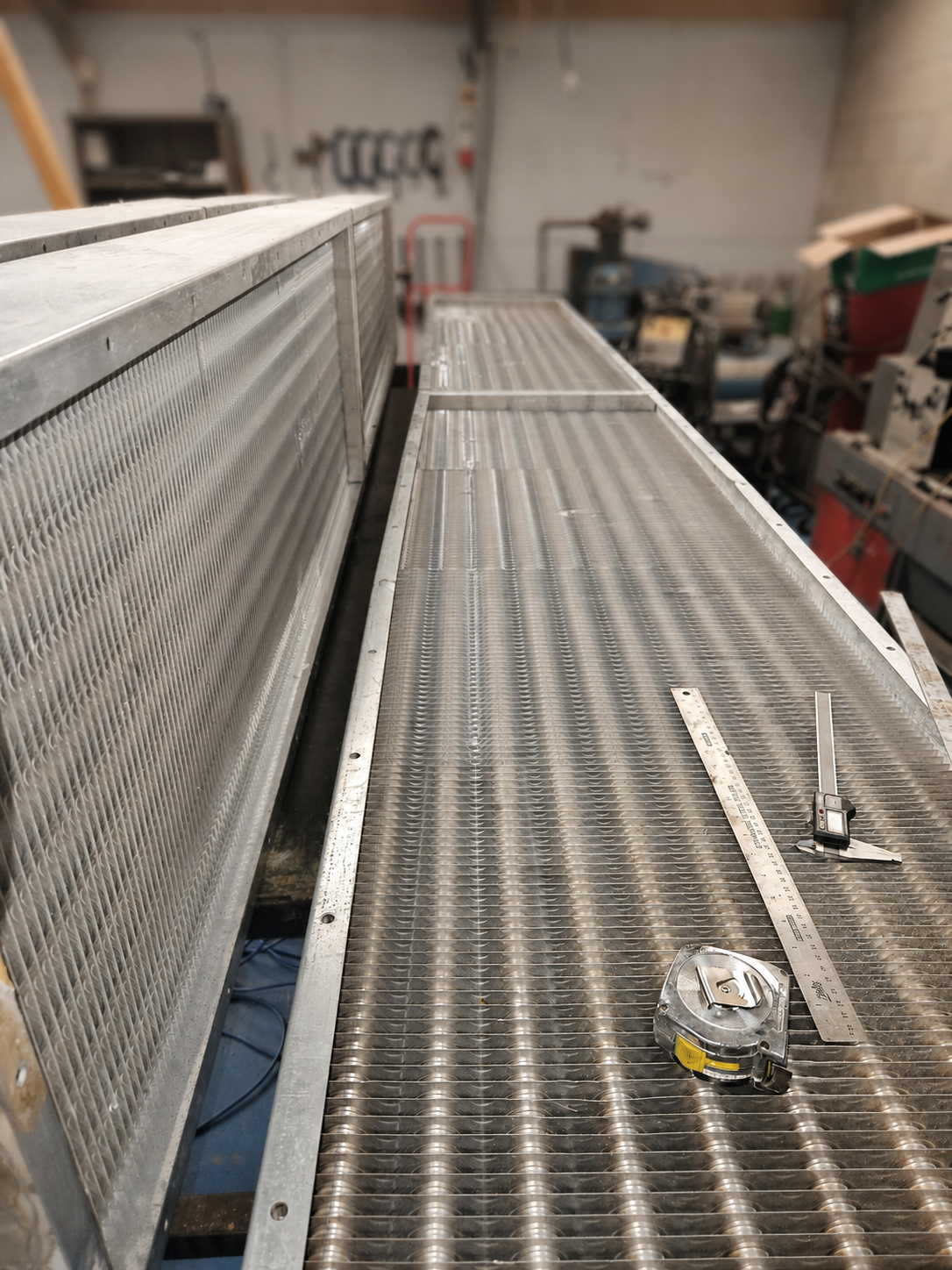
Industrial heating and process coils can suffer tube failure, damaged joints, fin deterioration and physical damage while much of the original unit remains serviceable.
GES assesses the condition, establishes the practical repair route and carries out workshop-based repair and refurbishment, followed by pressure testing to verify the completed work.
Assess.
Repair.
Prove.
- 01Assess→
- 02Repair→
- 03Refurbish→
- 04Test→
- 05Return to service
Inspection & assessment
Understand the damage.
Then decide the repair.
Coil failure is not always limited to the point where the leak or damage becomes visible. Tube connections, headers, fins and surrounding areas are inspected to understand the condition of the unit and determine whether a practical, dependable repair can be achieved.
Where previous repairs are present, these form part of the assessment rather than simply being repaired again without understanding why the failure occurred.
Every solution starts with understanding the challenge.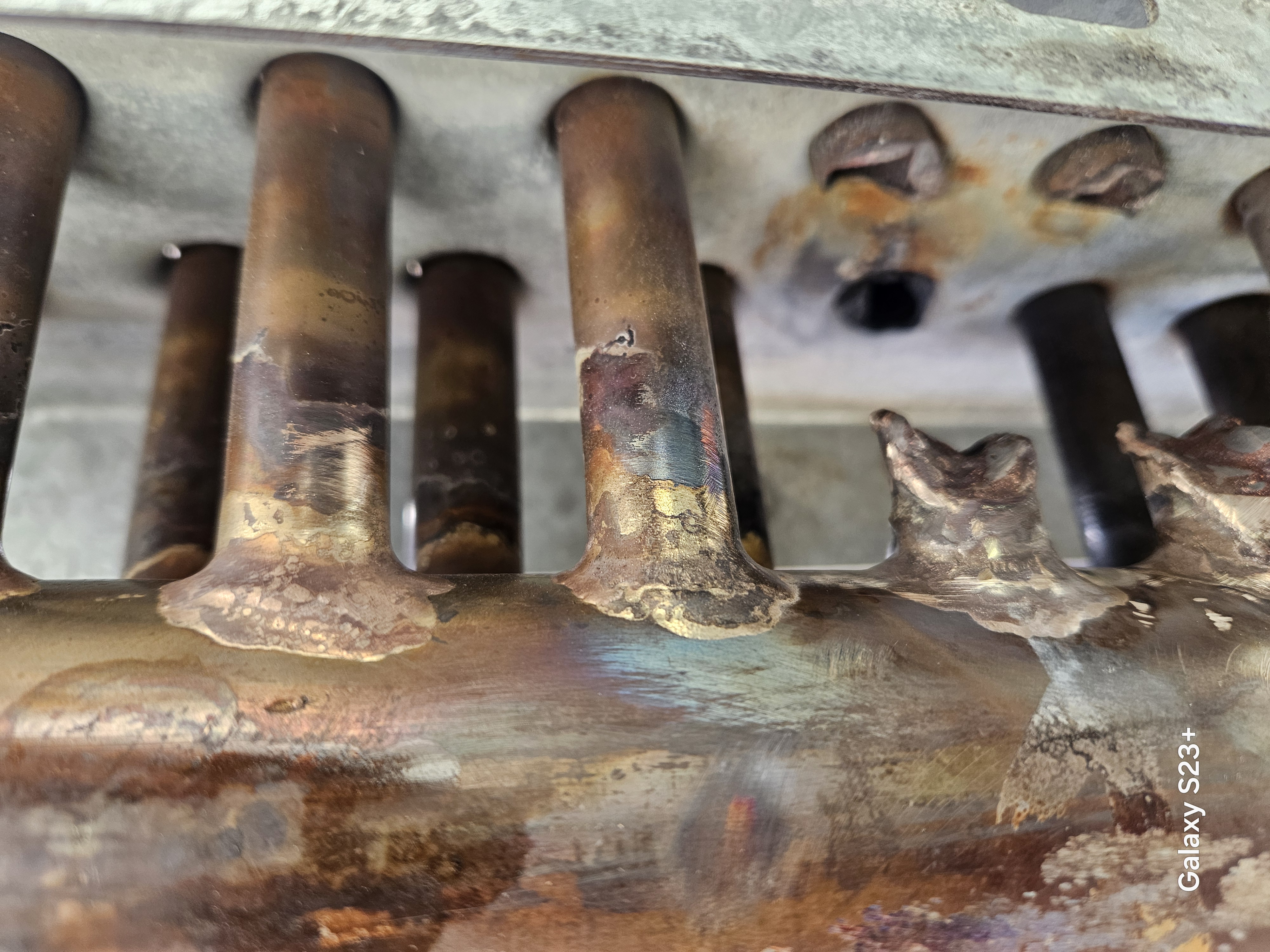
Controlled repair
Access what needs repairing.
Preserve what doesn't.
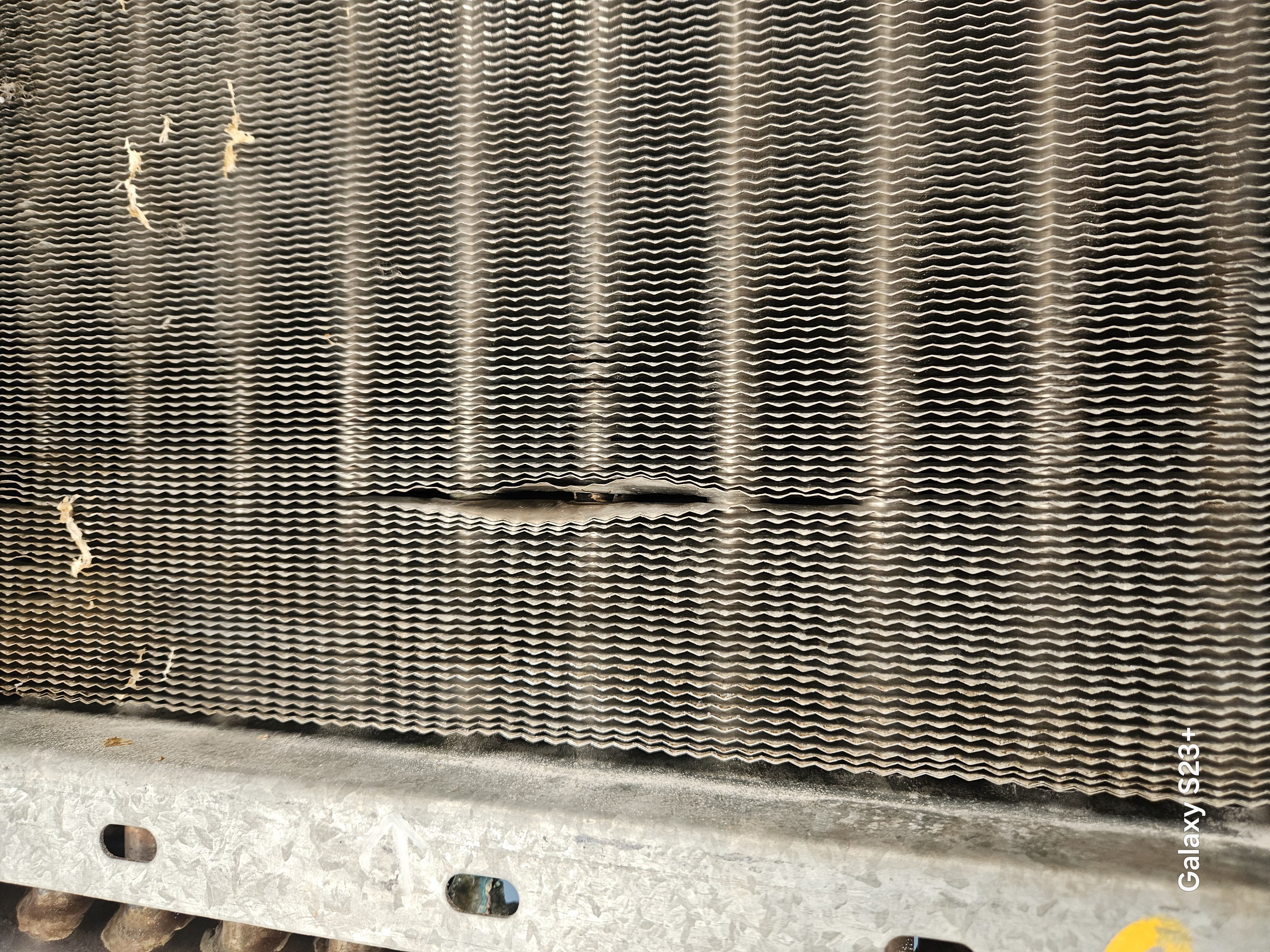
Where required, localised access can be created through the fin pack to reach damaged tubes and connections while retaining as much of the original coil as practical.
Repairs are carried out according to the construction, material and condition of the individual coil rather than applying a single repair method to every unit.
The objective is not simply to stop a leak. It is to return a dependable, serviceable coil.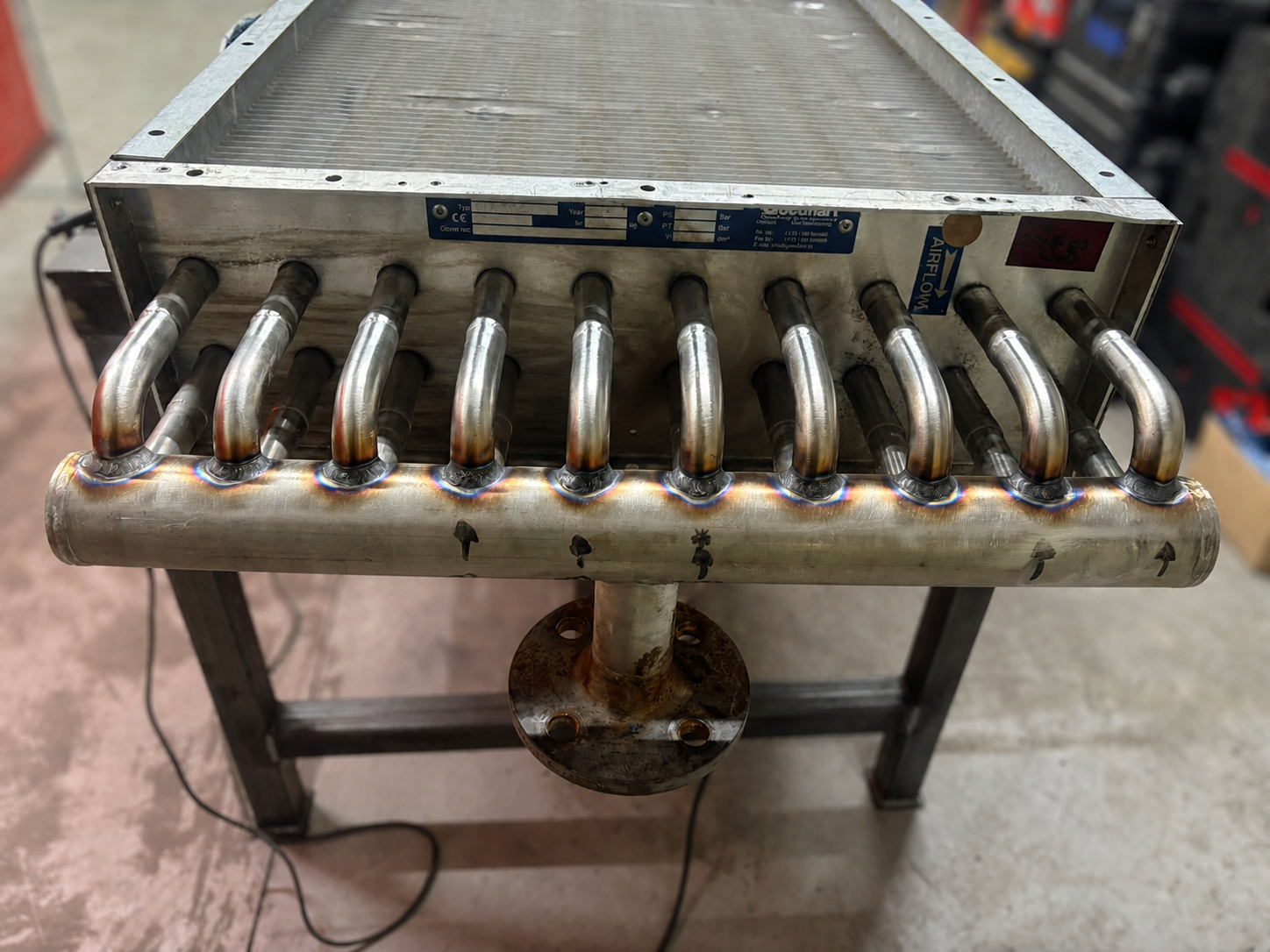
 Fin straightening & restoration
Refurbishment
The repair doesn't end
at the tube.
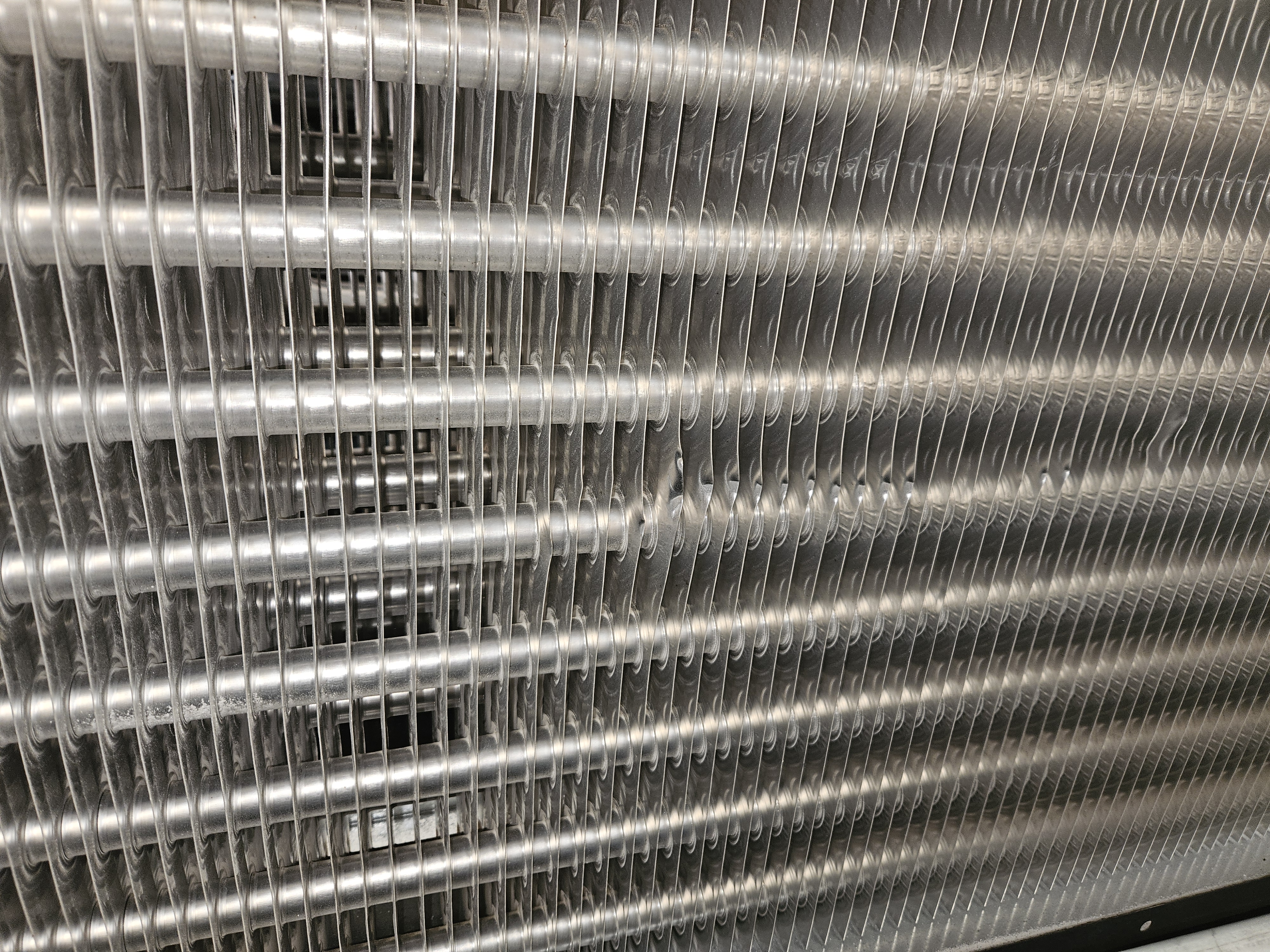
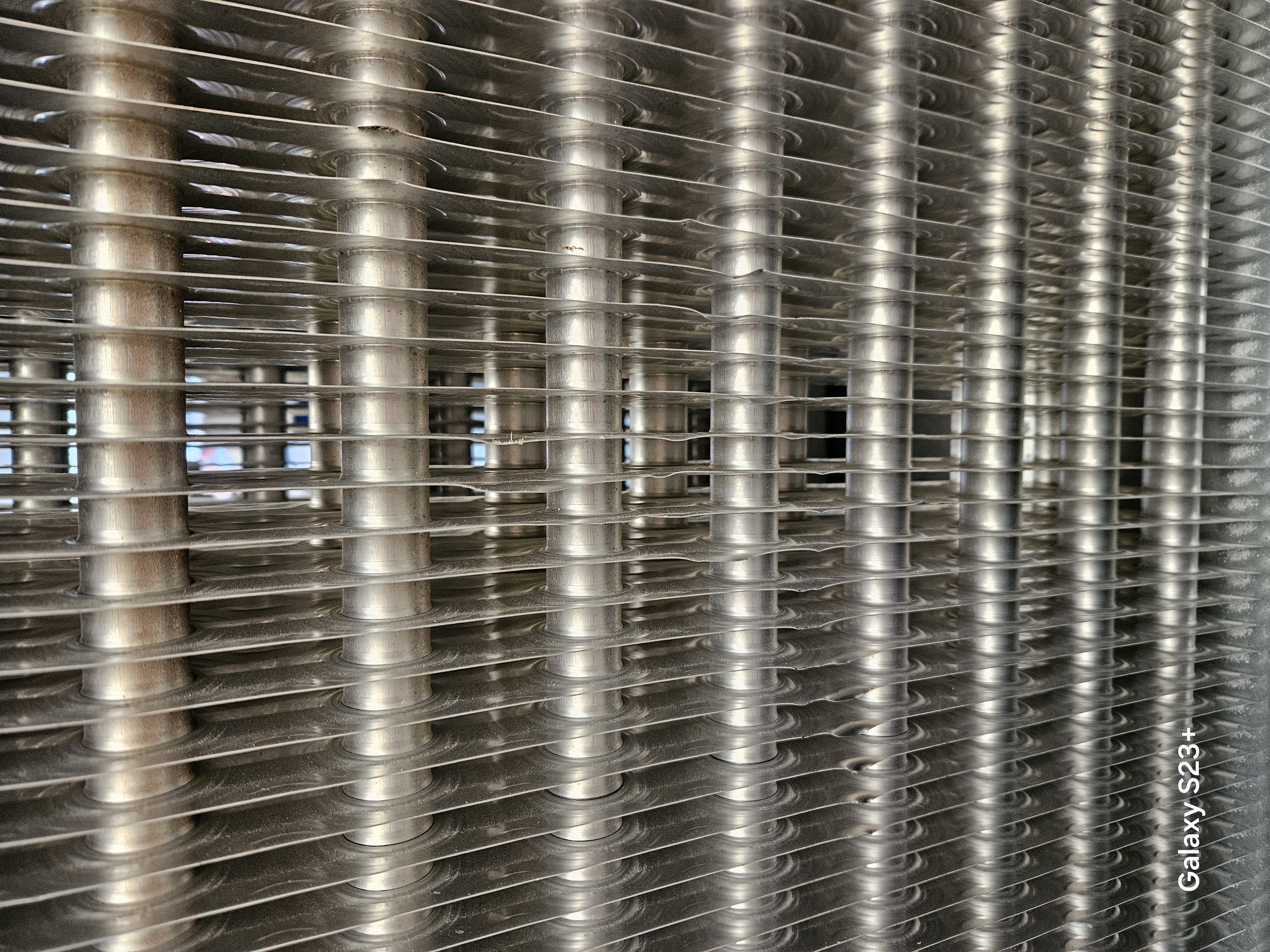
Damaged and disturbed fin areas can be carefully restored as part of the repair process, helping retain airflow through the coil and protecting the surrounding tube structure.
The overall condition of the coil is considered throughout the repair — not simply the original point of failure.
Pressure testing
A repair isn't complete
until it's proved.
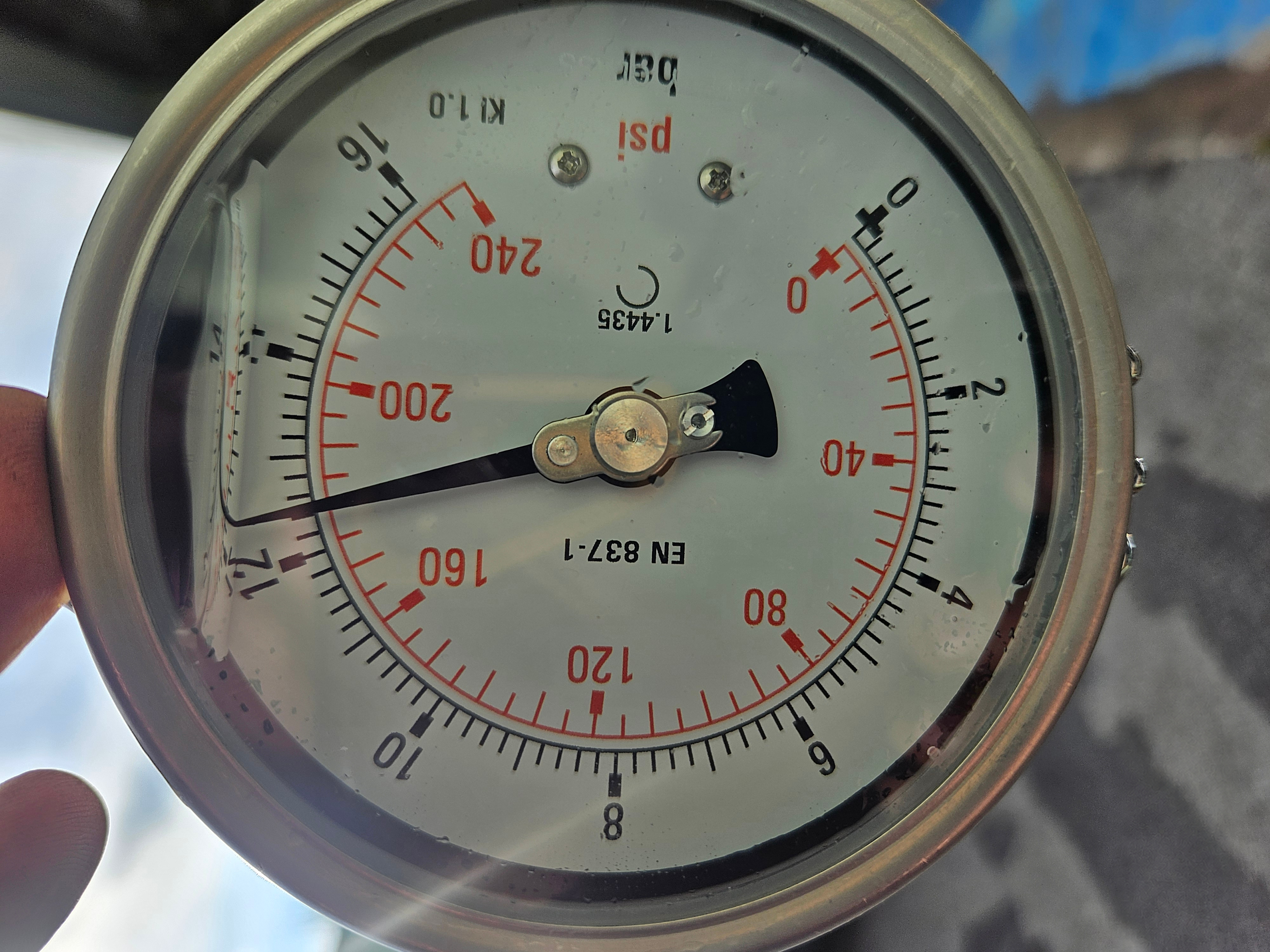
Following repair, coils can be hydrostatically pressure tested to an agreed test pressure appropriate to the equipment and available design information.
Testing provides verification of the completed repair before the coil is returned to the customer.
Where required, GES can provide documented test results as part of the completed repair package.
Workshop-led capability
Industrial coil repair &
refurbishment capability.
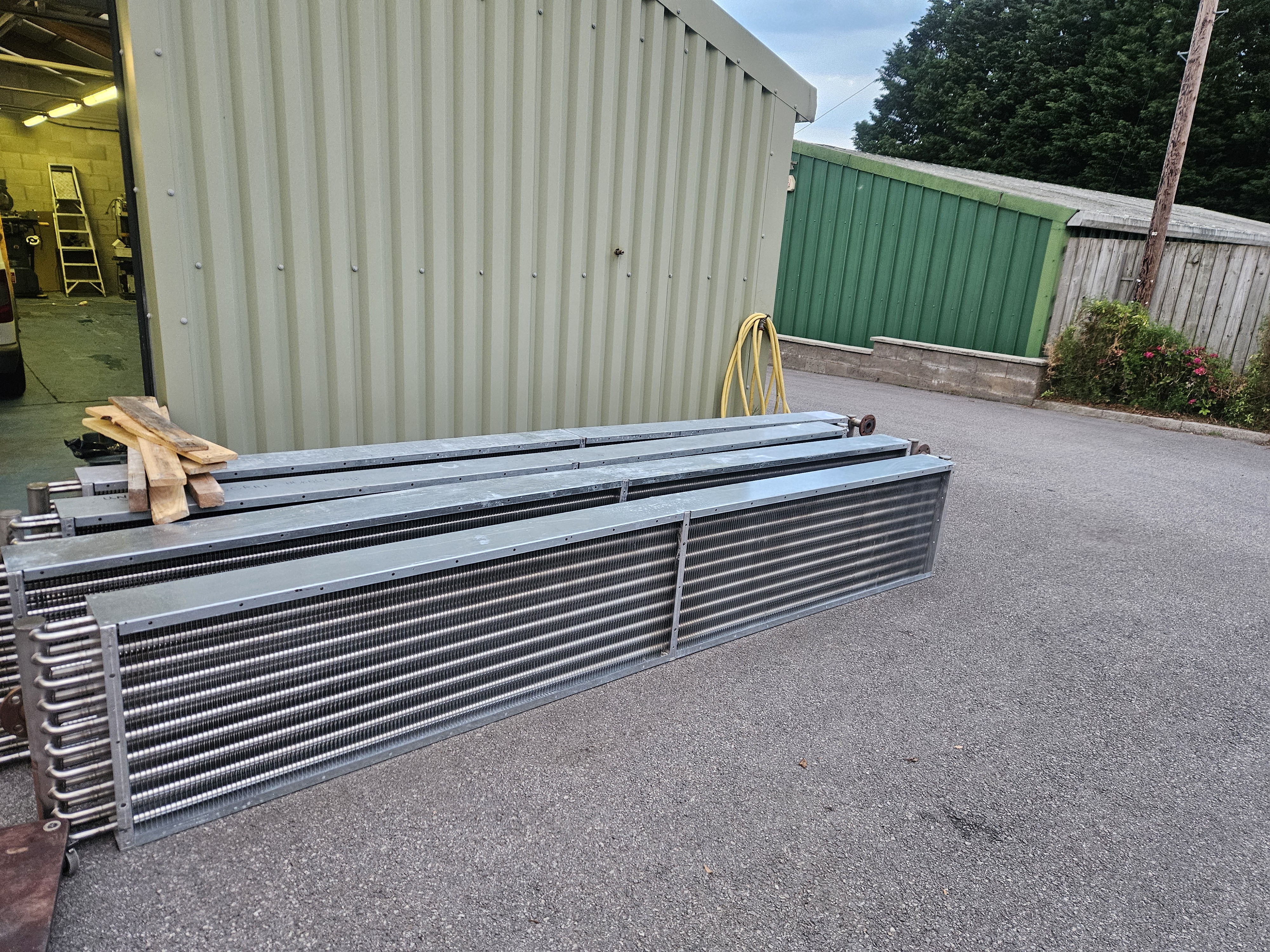
From one coil to multiple units
The scale changes.
The approach doesn't.
From individual damaged coils to multiple units requiring inspection, repair and testing, GES provides a single workshop-based engineering route from initial assessment through to completed repair.
Each unit is considered individually and the appropriate repair decision made from its condition, construction and intended service.
Talk to GES
Got a damaged coil?
Whether the problem is a leak, damaged tube, failed joint, deteriorated fins or an existing repair that has failed again, talk to GES about the condition before assuming replacement is the only option.